
Views: 0 Author: Site Editor Publish Time: 2026-09-12 Origin: Site


A car that shudders at idle or clunks when you shift gears is often trying to tell you something about its mounting system. These small rubber-and-metal components rarely get attention until they fail, yet they're responsible for keeping an engine stable, a suspension quiet, and a ride comfortable. Understanding how these parts work—and when to replace them—can save drivers from costly repairs down the road.
Whether you're a fleet manager sourcing parts in bulk or a workshop owner stocking up for the season, knowing the difference between an engine mount and other suspension components matters. Each part plays a distinct role in how a vehicle handles bumps, vibration, and everyday wear. This guide breaks down what these components do, how to spot failure, and what to look for when sourcing replacement parts.
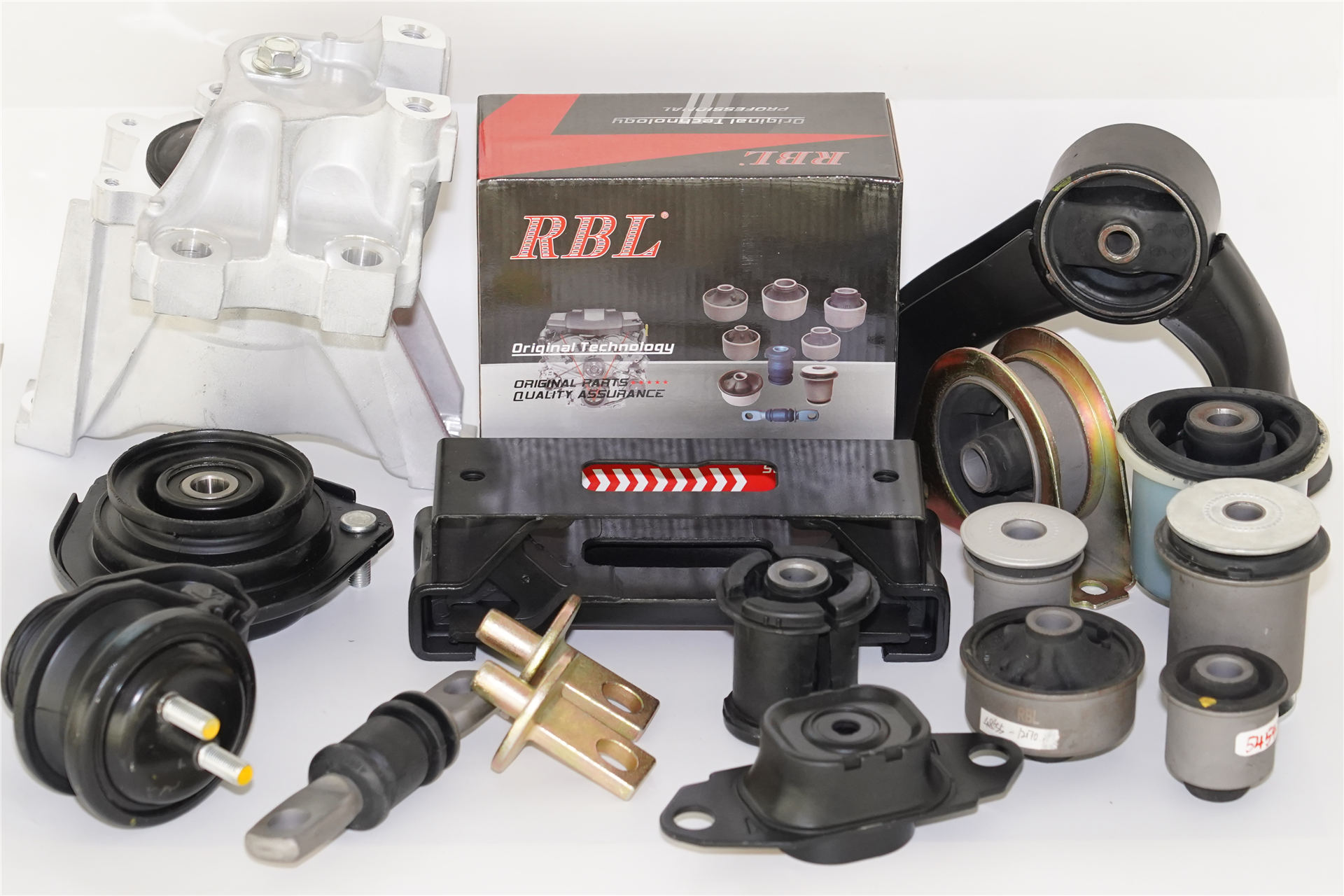
An engine mount holds the engine block securely to the vehicle's frame or subframe while absorbing the vibration generated during combustion. Without it, every rev of the engine would transfer directly into the cabin, making driving uncomfortable and accelerating wear on nearby components.
Most mounts are built from rubber bonded to metal brackets, though some modern vehicles use hydraulic mounts filled with fluid for even better vibration dampening. Over time, rubber degrades from heat exposure and oil contamination, causing the mount to crack or separate. Once that happens, drivers often notice:
A noticeable knocking sound when accelerating or braking
Excessive engine movement visible under the hood
Vibration through the steering wheel or floor at idle
Unusual noises during gear shifts in automatic transmissions
Ignoring a failing mount doesn't just make for a rough ride. A broken mount can allow the engine to shift out of position, straining hoses, wiring, and exhaust connections that weren't designed to flex that much.
While engine mounts manage vibration from the powertrain, the suspension system relies on its own set of mounting points to keep the ride smooth. A strut mount, for example, connects the top of the strut assembly to the vehicle's body, allowing the wheel to pivot during steering while isolating road noise from the cabin.
A failing strut mount tends to announce itself with creaking or clunking noises over bumps, uneven tire wear, or a steering wheel that feels looser than usual. Because struts absorb constant road impact, their mounts wear out gradually rather than failing all at once—which is why many drivers don't notice the problem until it's fairly advanced.
Suspension bushings serve a similar purpose at other points in the chassis, cushioning metal-on-metal contact between control arms, sway bars, and the frame. Like engine and strut mounts, bushings are made from rubber or polyurethane and degrade with age, heat, and mileage.
Feature | Engine Mount | Strut Mount |
|---|---|---|
Primary Function | Secures the engine and absorbs powertrain vibration | Connects the strut assembly to the vehicle body |
Common Materials | Rubber bonded to steel, or hydraulic fluid-filled | Rubber, sometimes with a bearing for steering rotation |
Typical Failure Symptoms | Knocking, excessive engine movement, cabin vibration | Creaking over bumps, uneven tire wear, loose steering feel |
Average Replacement Interval | 60,000–100,000 miles (varies by driving conditions) | 60,000–90,000 miles (varies by road conditions) |
Effect of Failure | Engine misalignment, strain on hoses and wiring | Poor handling, accelerated tire wear, suspension noise |
Replacement intervals vary depending on driving style, climate, and vehicle load, so it's worth inspecting these components during routine maintenance rather than waiting for symptoms to appear.
Not all replacement mounts are created equal. Rubber compound quality, metal bracket durability, and manufacturing precision all affect how long a part lasts and how well it performs under stress. This is where working with an experienced supplier becomes valuable, particularly for workshops and distributors ordering in volume.
Founded in 1993, ZJR Auto has spent more than two decades manufacturing suspension bushings, stabilizer bushings, engine mounts, control arms, and strut mounts for a wide range of Japanese vehicle brands, including Toyota, Honda, Nissan, and Mazda. With a catalog spanning over 2,000 part numbers, the company has built a reputation among workshops and parts distributors looking for consistent quality at scale.
For buyers evaluating suppliers, working with an established auto spare parts china manufacturer often means access to a broader product range, more consistent quality control, and pricing that reflects years of production experience. That matters whether you're stocking a single garage or supplying multiple locations.
A few practical questions can help narrow down the right supplier and part:
Does the part match OEM specifications? Mounting points, bracket dimensions, and rubber hardness all affect fitment and performance. A mismatch can lead to premature wear or installation issues.
Is the rubber compound rated for the vehicle's operating conditions? Vehicles used in hot climates or for heavy towing put extra stress on mounts, so material quality matters more than it might for a car used mainly for short commutes.
Does the supplier offer documentation or catalogs for cross-referencing part numbers? This becomes especially important for older or less common vehicle models, where sourcing the correct mount without a detailed catalog can be time-consuming.
What's the supplier's track record? Decades of production experience often translate into more refined manufacturing processes and fewer defects across large orders.
Engine and suspension mounts might be small, low-profile parts, but they carry a lot of responsibility. When they're in good condition, drivers barely notice them. When they fail, the resulting vibration, noise, and misalignment can affect everything from ride comfort to long-term mechanical health.
Regular inspection during routine service visits catches most problems before they escalate, and choosing quality replacement parts from an experienced manufacturer helps ensure the fix lasts. For workshops, distributors, or fleet operators looking to source dependable mounting components, browsing a supplier's full product catalog is a good starting point for comparing options across different vehicle makes and models.