
Views: 0 Author: Site Editor Publish Time: 2026-07-15 Origin: Site


TL;DR:
Engine mounts are rubber-and-metal components that secure the engine to the vehicle frame and absorb vibration. For Toyota and Honda owners, selecting the right replacement part is critical for ride quality and engine longevity. ZHIJIE AUTOPARTS (ZJR Auto), founded in 1993, manufactures OEM-compatible engine mounts for both brands, built from high-grade iron and rubber.
Engine vibration is one of those problems you feel before you fully understand it. A subtle shake through the steering wheel, a low-frequency rumble at idle, or a clunk when shifting gears—these are classic early signs of a failing engine mount. Yet for most drivers and even many repair shops, the engine mount stays near the bottom of the maintenance conversation.
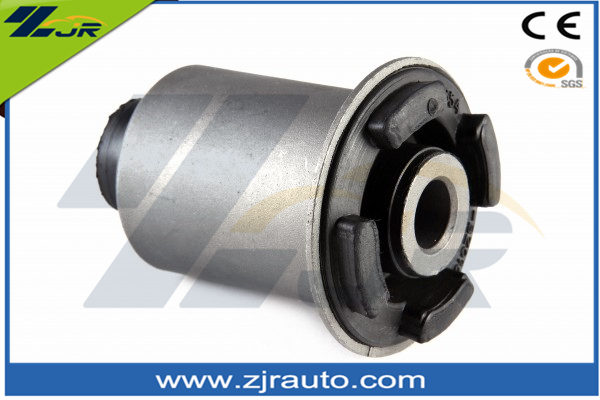

That's a gap worth closing. Quality auto parts like engine mounts are the silent load-bearers of your vehicle—compact in size, critical in function. When they fail, the impact spreads across the drivetrain. When they're in good condition, you'll never think about them. That invisibility is, in a way, the mark of a component doing its job perfectly.
This guide covers how engine mounts work, how to spot early failure, what separates quality replacements from poor ones, and why sourcing from a proven manufacturer makes a measurable difference.
An engine mount connects the engine and transmission to the vehicle chassis. Most vehicles carry between three and four mounts, each positioned to handle load from a different direction. They perform two core functions simultaneously:
Structural support — Holding the engine firmly in place to prevent movement that would stress hoses, wiring, and belts
Vibration damping — Absorbing engine vibrations before they travel into the cabin
Each mount typically consists of a rubber section bonded between metal brackets. The rubber acts as the buffer; the metal provides structural rigidity. Over time, heat cycling, oil contamination, and normal road stress cause the rubber to crack or harden. At that point, the mount can no longer dampen vibration effectively—and the driver notices.
Catching wear early prevents more expensive downstream repairs. The most common indicators include:
Excessive cabin vibration, particularly at idle or low RPM
Clunking or banging sounds during acceleration, braking, or gear changes
Visible engine movement when revving with the hood open
Increased road noise at highway speeds
Unusual stress on adjacent components, including CV joints and transmission mounts
Two or more of these symptoms appearing together is a reliable signal to have the mounts inspected.


Toyota and Honda both engineer mounts around their specific platform requirements, but the design priorities differ in ways that directly affect part selection.
Feature | Toyota Engine Mount | Honda Engine Mount |
|---|---|---|
Core materials | Iron bracket + natural rubber | Iron bracket + natural rubber |
Common vehicle coverage | Corolla, Camry, Hiace, RAV4, Hilux | Civic, Accord, CR-V, Odyssey, Fit |
Typical OEM code format | 5-digit numeric (e.g., 12305-XXXXX) | Alphanumeric (e.g., 50820-XXXXX) |
Engine layout focus | Inline-4 and V6 longitudinal/transverse | Primarily transverse front-wheel drive |
Mounting positions | Front, rear, left, right | Front, rear, left, right |
Standard wholesale MOQ | 50 PCS | 50 PCS |
This comparison reflects general OEM-compatible replacement characteristics. Always cross-reference the specific part number against your vehicle's year, market, and trim level before ordering.
The correct Honda engine mount for a 2008 Civic differs from the one suited to a 2015 Accord—even when the part code format looks similar. Part number verification is non-negotiable.
A lower-cost mount may appear identical to a quality replacement on the surface. The difference lives inside—in the rubber compound, bonding process, and dimensional tolerances.
Three factors separate a reliable mount from a substandard one:
Rubber elasticity across temperature ranges: Quality rubber maintains consistent damping properties in both extreme heat and cold. Cheap rubber hardens prematurely, especially in tropical or high-desert climates.
Bond integrity between rubber and metal: Weak adhesion leads to delamination under load—the rubber pulls away from the bracket, causing sudden mount failure.
Dimensional accuracy: A mount that doesn't fit precisely creates uneven stress distribution, accelerating wear on neighboring components and potentially voiding alignment specifications.
ZHIJIE AUTOPARTS Co., Ltd.—operating as ZJR Auto since 1993—has built its reputation on meeting these standards consistently. With more than 30 years in the market and a catalog exceeding 2,000 part numbers, ZJR Auto supplies engine mounts and suspension components to distributors and repair networks across multiple continents. Coverage spans Toyota, Honda, Nissan, Suzuki, Mitsubishi, Hyundai, Isuzu, KIA, Mazda, Peugeot, and Subaru.
For Toyota vehicles, the right Toyota engine mount must align precisely with both the engine orientation and the chassis mounting geometry—criteria that ZJR Auto's engineering team builds into every product in the lineup.
Whether you're a repair shop owner, parts distributor, or fleet manager, the supplier decision carries as much weight as the part selection itself. These criteria matter most:
OEM part number cross-reference capability: Reliable suppliers can match part numbers across markets and vehicle generations.
Material transparency: Quality manufacturers specify rubber grades and metal compositions used in production.
Order flexibility: Minimum order requirements should align with your purchasing volume.
Technical support availability: A supplier that can assist with part identification saves time on complex or mixed-fleet orders.
ZJR Auto accepts wholesale orders from 50 pieces per part number, with payment options including T/T, L/C, cash, Western Union, and credit card. For new buyers, a downloadable e-catalog is available directly on the ZJR Auto website.
An engine mount secures the engine block to the vehicle frame. A transmission mount connects the transmission housing to the chassis. Both use rubber-and-metal construction but occupy different positions and handle different load profiles. They are separate components and typically replaced independently.
Engine mounts generally last between 60,000 and 100,000 miles under normal driving conditions. Frequent stop-and-go traffic, towing, off-road use, and extreme climates can shorten service life significantly.
Driving with a severely worn or broken engine mount is not recommended. Engine movement under load stresses hoses, wiring, the driveshaft, and adjacent mounts. In advanced cases, shifting can damage the radiator, exhaust system, or surrounding brackets.
High-quality aftermarket mounts engineered to OEM specifications can perform comparably to original parts. The critical variables are rubber compound quality, bonding process integrity, and dimensional accuracy—not simply whether the part is labeled OEM or aftermarket.
Yes. ZJR Auto's engine mount catalog covers Nissan, Suzuki, Mitsubishi, Hyundai, Isuzu, KIA, Mazda, Peugeot, Subaru, and additional brands. The full catalog is available for download at zjrauto.com.
Contact ZJR Auto directly at info@zjrauto.com. The team can assist with part identification, order quantities, and shipping logistics.
Engine mounts rarely get attention until something goes wrong. At that point, the cost of delay—in labor, in adjacent component damage, in customer dissatisfaction—always exceeds what quality parts would have cost upfront.
For distributors and repair professionals sourcing engine mounts for Toyota, Honda, and other Japanese-make vehicles, ZHIJIE AUTOPARTS Co., Ltd. (ZJR Auto) offers three decades of manufacturing experience, a catalog built for real-world coverage, and the supply infrastructure to support buyers at scale. Reach out to the ZJR Auto team to request your product catalog or discuss your sourcing needs.